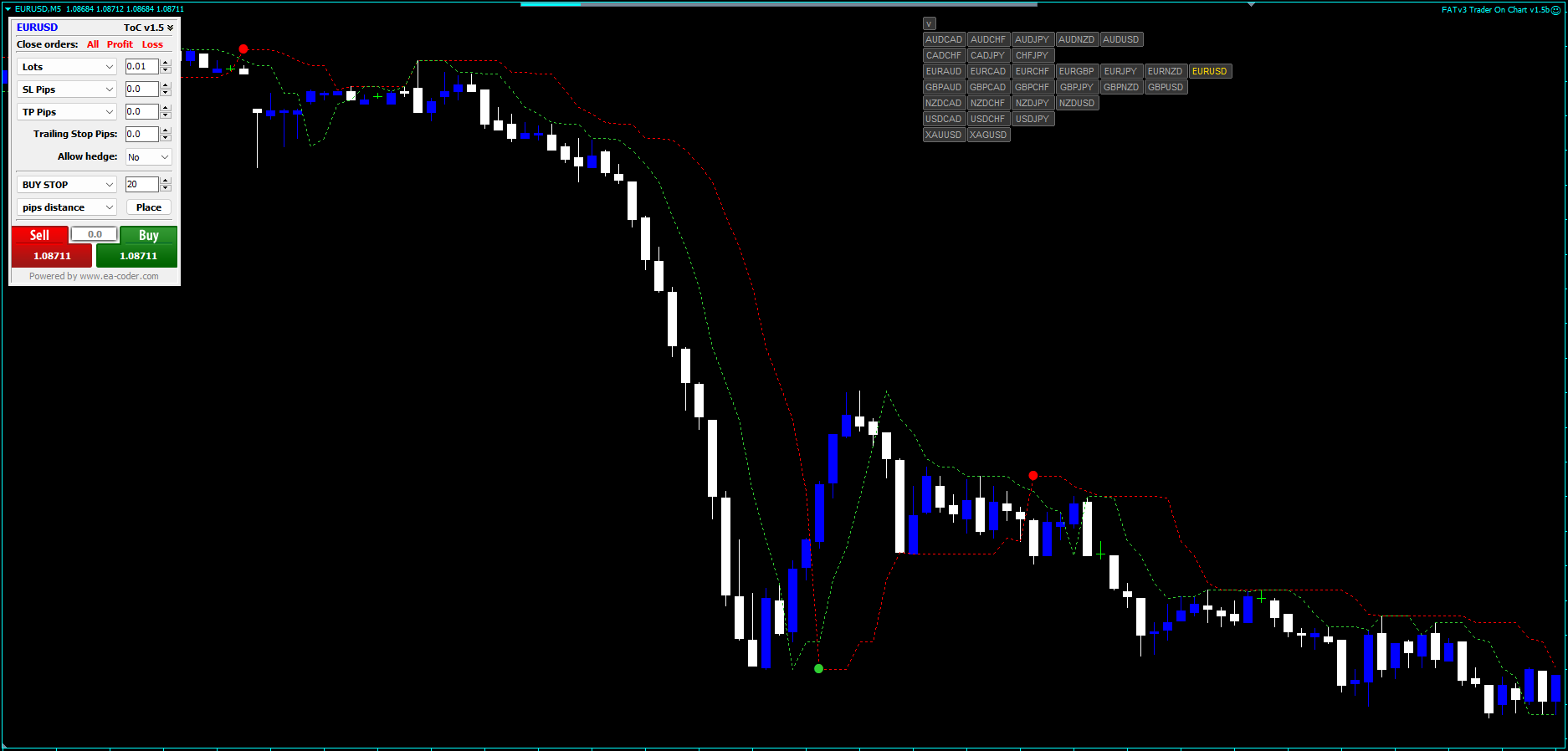
In the fast-paced world of Forex trading, accurate market analysis is crucial for making informed decisions and maximizing profits. Traders rely on a combination of strategies, tools, and technical indicators to predict price movements and identify potential trading opportunities. forex indicator are particularly valuable because they help analyze market trends, gauge momentum, and manage risk. Understanding and using the right indicators can significantly improve trading performance.
1. Moving Averages (MA)
Moving averages are among the most widely used Forex indicators. They smooth out price data to reveal the underlying trend over a specific period. Simple Moving Averages (SMA) and Exponential Moving Averages (EMA) are popular types, with EMAs giving more weight to recent prices. Traders use moving averages to identify trend direction, confirm signals, and determine support and resistance levels. Crossovers between short-term and long-term moving averages often signal potential buy or sell opportunities.
2. Relative Strength Index (RSI)
The Relative Strength Index (RSI) is a momentum oscillator that measures the speed and change of price movements. It ranges from 0 to 100 and is commonly used to identify overbought or oversold conditions. When the RSI exceeds 70, a currency pair may be considered overbought, suggesting a potential reversal or correction. Conversely, an RSI below 30 indicates oversold conditions, signaling a possible buying opportunity. RSI is particularly effective when combined with trend analysis to confirm market entries and exits.
3. Bollinger Bands
Bollinger Bands are volatility indicators consisting of a middle moving average and two standard deviation lines above and below it. They help traders visualize price volatility and potential reversal points. When prices move close to the upper band, the asset may be overbought, while proximity to the lower band suggests it may be oversold. Bollinger Bands are often used in conjunction with other indicators to validate signals and manage risk in volatile markets.
4. MACD (Moving Average Convergence Divergence)
The MACD is a trend-following momentum indicator that shows the relationship between two moving averages of a currency pair’s price. It consists of the MACD line, signal line, and histogram. Traders use MACD to identify trend direction, strength, and potential reversals. Crossovers of the MACD line and the signal line can signal entry or exit points, making it a versatile tool for both trend traders and swing traders.
5. Stochastic Oscillator
The Stochastic Oscillator compares a currency pair’s closing price to its price range over a specific period. It is used to identify overbought and oversold conditions, similar to RSI, but focuses on the position of the close relative to the range. Readings above 80 indicate overbought conditions, while readings below 20 suggest oversold levels. The Stochastic Oscillator is particularly effective in range-bound markets and helps traders anticipate potential price reversals.
6. Combining Indicators for Effective Analysis
No single indicator provides a complete picture of the market. Successful traders often combine multiple indicators to validate signals and minimize false entries. For instance, using RSI with moving averages or Bollinger Bands can enhance accuracy and confirm trade decisions. Understanding how indicators complement each other allows traders to make informed and strategic moves.
In conclusion, Forex indicators are essential tools for accurate market analysis. By incorporating moving averages, RSI, Bollinger Bands, MACD, and Stochastic Oscillators into their trading strategy, traders can better understand market trends, identify opportunities, and manage risk effectively. Proper use of these indicators, combined with discipline and market awareness, lays the foundation for consistent trading success.